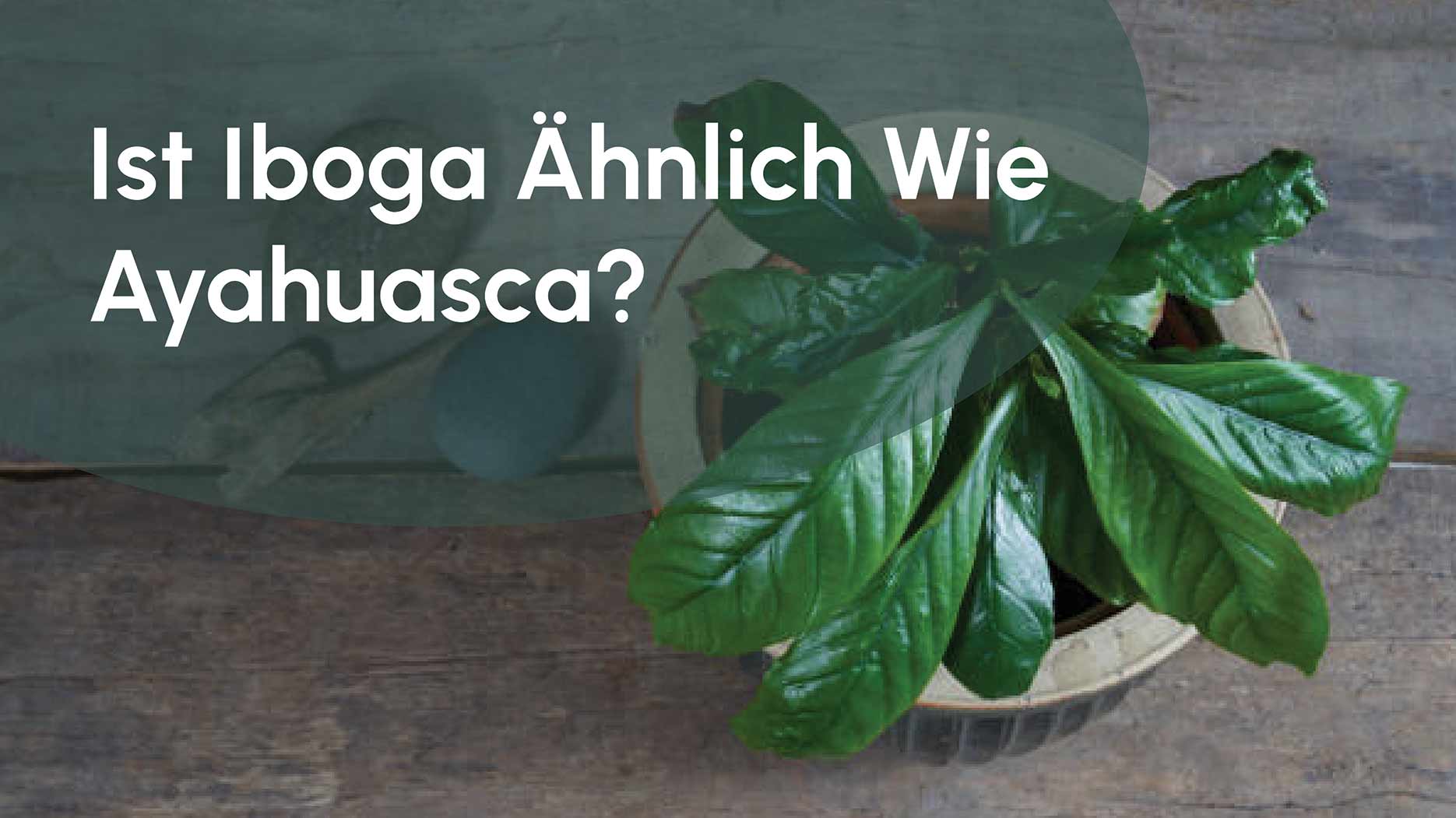
Is Iboga similar to Ayahuasca?
Many people are interested in Iboga and ayahuasca, but not everyone understands the differences between these two psychoactive plants.
If you are considering taking Iboga, or if someone you know about it, this article will help clarify any confusion about what it means to take Iboga and Ayahuasca and what the experience looks like.
Iboga is not comparable to ayahuasca.
Iboga is a drug obtained from the roots of an African tree.
It can help people process past traumatic experiences and heal their bodies, but in many ways is not comparable to ayahuasca.
Iboga has proven to be a promising antidepressant and addictive drug that has hardly any side effects compared to other prescription drugs that are on the market today.
It has also been shown to improve the cognitive abilities of patients with Parkinson’s or Alzheimer’s if it is taken regularly over a longer period of time.
However, Iboga has not been nearly as well studied as Ayahuasca, and its potential benefits are still being researched by researchers around the world.
Ayahuasca is a tea made from the Amazonian Ayahuasca vine and other plants, while Iboga is a drug obtained from the roots of an African tree.
Iboga and Ayahuasca are similar but not the same. Iboga is a drug that comes from the root of a African tree called Tabernanthe Iboga is made while ayahuasca is a tea made from the Amazonian Ayahuasca vine and other plants.
The most important psychoactive component of both ibogain and yage (the common name for ayahuasca) is DMT –
Dimethyltryptamine – which has been proven to cause altered states of consciousness, visions and hallucinations.
However, there is disagreement as to whether these effects are specifically due to the presence of DMT or instead to other chemicals also contained in these plants.
You can travel to Peru to take part in traditional Ayahuasca rituals, but you cannot legally travel to Africa to take Iboga.
Why is that? Well, the short answer is that Iboga is illegal in most countries.
The only country where she is native, Gabon has banned her use for religious purposes and does not allow foreigners to access the plant
– except through a handful of approved clinics that have received a permit from the government. Iboga plants are also grown in other parts of Africa and Europe, but have not yet been legalized anywhere else.
In addition, there are some countries where Iboga is technically not illegal, but remains inaccessible for political or logistical reasons:
In Zambia it is legal but subject to import restrictions; In Cameroon it is legal under certain circumstances (e.g. for medical trials); Everywhere else on the continent it is simply illegal, with the exception of South Africa, which allows limited access under certain conditions (e.g. for scientific research).
In Europe and North America, there are no laws explicitly prohibiting Iboga consumption as long as someone has a prescription from their doctor – and even then it would be difficult for law enforcement authorities as there are currently no drug tests to do BWITI alkaloids like Ibogain prove.”
Iboga and Ayahuasca are not only fundamentally different, some essential components of the two experiences are completely opposite
Iboga is a root brewed into a tea. Ayahuasca, on the other hand, is a vine brewed into a tea. The iboga root contains psychoactive alkaloids, which in small doses (about 0.3 grams) evoke dream-like visions.
DMT (Dimethyltryptamine), one of the main active ingredients of Ayahuasca plants such as Psychotria viridis and Diplopterys cabreranae, produces intensive hallucinatory effects.
Boga is legal in Africa, but illegal in the United States.
That means you can’t buy it here without going to an underground market or risking an arrest by buying it illegally online from foreign sellers who might lie what they sell to you.
Meanwhile: “Ayahuasca” can be purchased legally in the US, but not with anything like Ibogain or any other alkaloid derived from plants that exhibit ibogain-like properties;
It is not extracted from any plant material by heat or pressure infusion with boiling water – a process that would extract all possible unwanted chemical compounds along with what we actually want to get out.”
Ayahuasca is legal in South America, although it is illegal in most parts of the world.
In the United States, Ayahuasca is illegal.
In the United Kingdom and Australia, Ayahuasca is also illegal.
In Canada, both Iboga and Ayahuasca are not regulated by Health Canada or any other government agency.
It is unclear which long-term Iboga impact on human health has and whether there is any benefit at all.
The Ibogain Research Center reports that “it is not known whether chronic intake of ibogain can cause permanent brain and other organ damage”.
This suggests that some unknown dangers may occur with regular Iboga consumption, but it does not necessarily mean that Iboga will make you sick or harm you in any way.
Apart from these unknown long-term effects on human health, there are also no clear benefits of Iboga consumption compared to taking another type of hallucinogen (like ayahuasca).
The Ibogain Research Center doesn’t say anything on this subject either way, but most people agree that Iboga another effect As Ayahuasca has because it contains more alkaloids than Ayahuasca – so much so that it can be difficult to compare the two drugs directly without comparing their chemical composition first (which we haven’t done here!).
Many people report that taking Iboga helped them overcome their difficulties with drugs or psychological problems and reconnect with their true purpose in life or their “higher self”
Many people report that taking Iboga has helped them overcome their difficulties with drugs or psychological problems and reconnect with their true purpose in life or their “higher self”.
In addition, many of these advantages are not only long-lasting, but also immediately noticeable.
However, the first results can be a bit unpleasant, as Iboga frees you from all sorts of poisons, including psychological poisons.
Iboga can also cause you to vomit frequently due to its detoxifying effect on the body (this is normal).
Conclusion: Don’t expect an ibogain experience like an ayahuasca experience.
The big difference is that Ibogain no visionary experiences evokes.
It’s not a psychedelic, which means that Iboga doesn’t evoke hallucinations or visions like Ayahuasca does.
Taking Iboga can cause slight visual effects and the world around you can appear brighter than usual, but that’s nothing compared to the intense visualizations that Ayahuasca evokes.
But don’t worry – Iboga has its own unique benefits that make it worth giving it your own attention!
If you are looking for an alternative to Ayahuasca or just want to try something different, then this guide should help you start your journey with this powerful plant medicine!

Conclusion
While it may be tempting to compare Iboga and Ayahuasca, it is important to remember that they are very different substances.
Both have their own unique advantages, but the comparison is actually lagging. The only thing they have in common is that they both come from plants from South America!